.png)
Statement of Solidarity

We condemn the violence inflicted by federal immigration enforcement agencies and affiliated federal law enforcement personal operating under the direction of the U.S. Department of Homeland Security (DHS), such as U.S. Customs and Border Protection (CBP) and, most notably, the U.S. Immigration and Customs Enforcement (ICE). The killing of a mother of three, Renee Good, in Minneapolis, and the shooting of Luis David Nino-Moncada and Yorlenys Betzabeth Zambrano-Contreras in Portland by a Border Patrol agent are acts of violence and intimidation that harm families, traumatize communities, and deepen fear among those who are already vulnerable.
Indigenous Peoples are being directly impacted. Tribal citizens have been wrongfully stopped, questioned, and detained based on appearance or language. Tribal IDs and Federal Certificates of Indian Blood have reportedly been dismissed, leading to violent arrests and prolonging unlawful detentions. These encounters cause profound psychological harm, retraumatizing communities with a long history of displacement and government-inflicted violence. Fear of ICE disrupts daily life, limits access to school, work, and important services, while destabilizing entire families and communities. These practices violate basic civil liberties, undermine Tribal sovereignty, and put Native Peoples at risk when moving within their own ancestral homelands that exist across colonial borders.
NAYA stands in solidarity with immigrants in our neighborhoods and community, as well as with all who live in fear. We call for accountability, transparency, and dignity for all people, and for an immediate end to practices that criminalize, dehumanize, and endanger our communities. We remain committed to protecting our relatives and will continue this work through community-building and advocacy efforts. At the next Portland Youth and Elders Council gathering on Saturday, January 24, from 1-3 pm at NAYA, there will be a presentation from Native American Program Legal Aid Services of Oregon. This is open to our community members and residents of Oregon and Washington.
Topics will include constitutional protections and guidance around engagement with immigration enforcement, including what is and is not required to share, including documentation that may be requested, and the role of Tribal IDs.

Vote No on Washington State Ballot Initiatives 011, 638 and 645
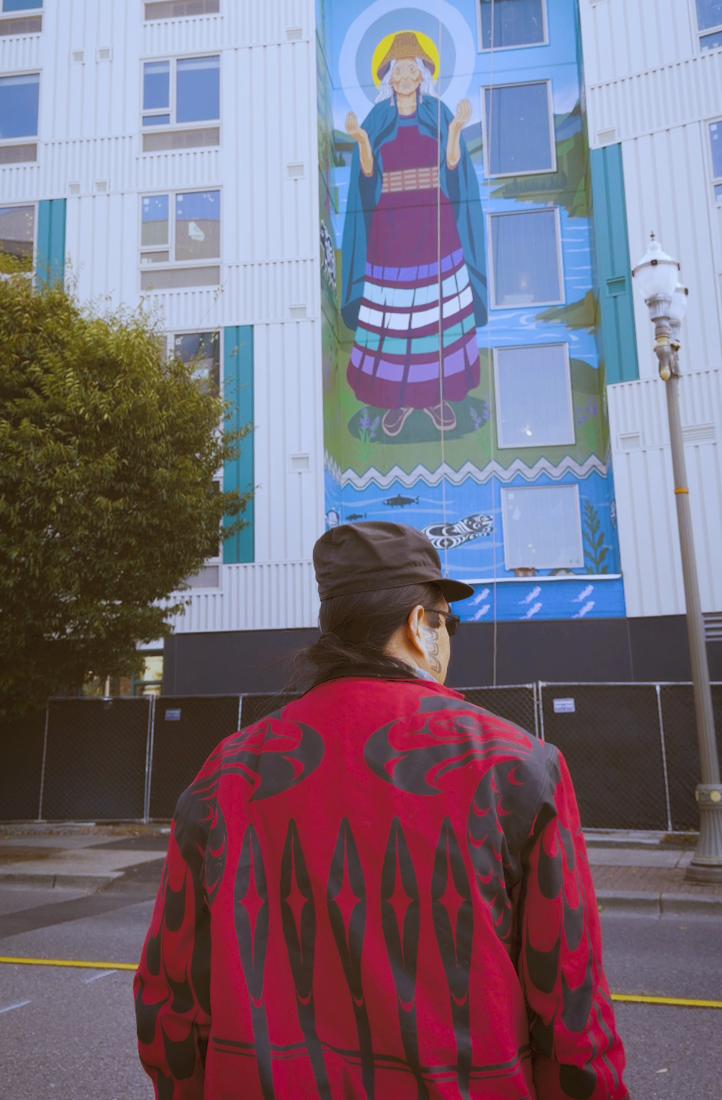
The Making of the Mural on the New Big River Home Apartments
.jpg)
.jpg)